
For Commercial Poultry Farmers in South Africa
Chicken Farm Solar Installations: 24/7 Power Protection for Your Flock
Lock your farm’s electricity at R1.20/kWh for 25 years — with a solar-plus-storage system built to protect your flock through every load shedding event.
The Problem
Every Year Eskom Takes More. Poultry Farms Cannot Function Without the Power Eskom Fails to Deliver.
You can renegotiate feed supplier contracts, optimise flock cycles, or trim administrative overhead. Those are managed decisions.
You cannot switch off your ventilation fans, interrupt your drinking water system, or let lighting programmes lapse. In summer, birds begin dying from heat stress within 2–4 hours of a ventilation failure. Your flock, your contracts, and your cash flow depend on power that never stops — ever.
And that’s exactly what Eskom is counting on.
Eskom tariffs have risen over 500% since 2008 — and electricity is one of the largest operating costs on a commercial poultry farm. For large broiler and layer operations, electricity accounts for 40–60% of running costs. At R2.50/kWh today and rising 8%+ annually, your energy spend grows every single year while your selling price is squeezed by retailers.
In summer, birds begin dying from heat stress within 2–4 hours of ventilation failure — the load is non-negotiable. Broiler houses and layer houses require continuous fan operation, especially between October and March. A load shedding event mid-day in Limpopo or the Western Cape is not an inconvenience — it is an emergency that can destroy an entire flock cycle.
Disrupting a layer hen’s lighting programme can set back production by 3 weeks and trigger a premature moult. Layer farms run precisely timed lighting schedules to maintain egg production. A power interruption that breaks the programme — even briefly — can push hens into moult, stripping production for weeks. The financial cost far exceeds the energy cost of a single outage.
Diesel generators cost R25–R40 per litre, require constant maintenance, and carry real run-out risk during extended load shedding. On a large farm running multiple houses, generator fuel costs during Stage 4–6 load shedding can reach R30,000–R80,000 per month. Transfer time is typically 10–15 seconds — during which fans are off. In summer, that matters.
Demand charges are highest for farms with constant, heavy baseline loads — and a poultry farm never switches off. Your fans, water systems, lighting, and feed equipment draw consistently around the clock. That flat, high demand profile puts you in the most expensive Eskom tariff band. A fixed solar rate of R1.20/kWh eliminates that exposure permanently.
Why Poultry Farms Feel an Outage Faster Than Most Businesses
Most commercial sites can wait out an outage. A poultry house can’t, because ventilation stops the moment the power does. The CEO of the South African Poultry Association told Poultry World in February 2023 that birds can die in as little as 45 minutes without ventilation, and that generators are common on poultry farms but run on diesel, which is a big expense. The design question is not how many panels fit on the roof. It is how long the battery storage must carry your fans, pumps and feed lines.
The only way out isn’t to manage around power failures. It’s to own your energy.
The Truth About Solar + Poultry
“Can Solar Reliably Power Ventilation Fans 24/7 — Including Summer Midday Peaks?”
Most poultry farmers assume it can’t. That assumption is costing them hundreds of thousands of rands every year — and leaving their flocks unnecessarily exposed to Eskom’s schedule.
A correctly specified solar-plus-storage system doesn’t just “help” with daytime power — it protects every critical load on your farm, around the clock. Your solar array generates power during daylight hours. Battery storage fills the gap at night and during load shedding. Grid connection provides any additional capacity automatically.
LiFePO4 battery storage switches in within milliseconds of grid failure — not the 10–15 seconds of a diesel generator. Your ventilation fans never stop. Your lighting programme never breaks. Your birds never experience a power event.
A commercial solar system for a poultry farm is engineered around your actual house count, fan requirements, lighting schedules, water pump loads, and peak summer demand — not a generic farm estimate.
What a Broiler or Layer House Actually Draws
Ventilation sizes the system. An 11-month University of Arkansas Division of Agriculture audit of a modern broiler house found that ventilation fans accounted for 88 percent of electricity demand and were the biggest contributor to peak demand. A separate ASABE paper on an Arkansas broiler house measured daily fan electricity from 11 to 268 kWh, depending on season and bird age.
Brooder heating mostly runs on fuel, not electricity (propane, in a 2021 review of broiler houses in Frontiers in Veterinary Science), so the rest of the electrical load is a set of smaller items:
- Evaporative cooling: pad pumps, which the same review puts at 0.4 to 1.5 kW.
- Feed and water: feed-line motors, bin augers and well or borehole pumps.
- Lighting: about 4 percent of consumption in the Arkansas house.
- Layer houses: in an Iowa study of two 50,000-hen aviary houses, ventilation was 30 percent of electrical demand in summer but under 5 percent in winter, while continuously running manure-drying blowers used about 51 percent of annual electricity.
A broiler house, a cage layer house and an aviary house each need their own load profile. A rule of thumb from another farm sizes the system wrong.
How Solar and Battery Storage Keep the Fans Running
Solar does not run your fans at night. Each source has one job: the panels carry the houses while the sun is up, battery storage carries the critical circuits when the grid drops or the sun is down, and the grid covers the rest. Two details decide whether the fans keep turning.
- Starting surge, not just running kW. NEMA’s motor guide puts locked rotor current at typically 600 to 700 percent of full load current. The inverter and battery have to be sized for the start-up of your largest fans.
- Battery kWh, not just kW. Power decides which fans can start. Stored energy decides how many hours they run, so capacity is set by the longest outage your critical circuits must cover.
Farm-Specific Sizing
Your system is engineered around your exact house count, fan loads, lighting schedules, and peak demand.
Millisecond Battery Failover
LiFePO4 battery storage switches in before fans even slow down — your birds never experience an interruption.
13-Year Track Record
BFO Solar has installed commercial and agricultural systems with 24/7 critical loads across South Africa since 2011.
Why BFO Solar Specifically
You’ve Probably Already Received 3 Solar Quotes. Here’s Why This One Is Different.
Most solar companies learned their trade on residential installations and scaled up. BFO Solar started in commercial and industrial — and built systems for agricultural operations where power failure is never an option.
Agricultural-load sizing, not residential rules of thumb. We engineer your system around fan motor starting currents, water pump loads, lighting schedules, incubator requirements, and feed system demands — before a single panel is specified. Most solar companies send a sales rep. We send an engineer.
Monitoring that protects your flock, not just your warranty. Your real-time monitoring dashboard lets us alert you the moment your system detects an anomaly. If something is wrong, our technical team contacts you — before a problem becomes a flock loss event.
COC-certified, insurance-compliant installations. Every BFO Solar installation includes a Certificate of Compliance. Your insurance policy and any banking facility financing your farm require this. Not every solar company delivers it as standard — we do.
Battery storage designed around your critical loads, not added as an afterthought. For poultry operations, battery storage is not optional — it’s the difference between your fans staying on during load shedding or your birds dying from heat stress. We size and design battery storage into every agricultural system from day one.
13 years operating through every stage of the load shedding era. South African power infrastructure, agricultural tariff structures, and SARS Section 12B requirements are unlike anywhere else. We’ve been here through Stages 1 through 6. We’re not guessing — we have the data and the track record.
The BFO Commercial Process
Three Steps to Energy Independence — Built Around Your Farm
Free Farm Energy Assessment
We visit your farm, walk each house, and analyse your load profile — fans, lighting, water, feed systems, incubators. You receive a detailed energy savings report showing exact projected savings. No cost, no obligation.
Custom System Design
Our engineers design a solar-plus-storage system sized for your exact operation — house count, summer peak loads, battery capacity to protect critical loads through any load shedding stage. No guesswork.
Certified Installation + Monitoring
Installation is phased around your flock cycles — we work between flocks where possible to eliminate any production risk. After commissioning, you get access to a real-time monitoring dashboard so you always know your critical loads are protected.
How House Size Turns Into System Size
A house’s draw changes with flock age and season, so there is no standard system per house. The method is the same on every farm:
- List every motor in every house, then read 12 months of Eskom bills to separate summer from winter use.
- Decide which circuits are critical and for how many hours they must run without the grid.
- Size the panels to your daytime use and the battery to those critical kWh, then check each roof and the supply.
Why It Works
Everything a Commercial Poultry Operation Needs From a Solar Partner
Ventilation Fan Protection
Your fans are sized into the system from day one. Battery storage ensures they never stop — even during Stage 6 load shedding in the middle of summer.
Your birds never experience heat stress from power failure.
Lighting Programme Continuity
Layer lighting schedules are critical to production. Your system keeps lighting running precisely on programme — load shedding or not.
No programme breaks. No premature moults. No lost production cycles.
R1.20/kWh Locked Rate
Your energy cost is fixed for 25 years. Eskom’s annual increases become irrelevant to your margins — permanently.
A cost line that finally goes down instead of up.
Installation Between Flocks
We schedule installation around your flock cycles. Main work is completed during house cleanout periods — your production is never put at risk.
Zero disruption to your production cycle.
Real-Time Monitoring Dashboard
24/7 visibility of your system’s output and your farm’s power status. Instant alerts if anything needs attention — before it becomes a flock emergency.
Peace of mind — even when you’re off the farm.
COC-Certified Every Time
Every installation includes a Certificate of Compliance — SANS-compliant, carried out by certified electricians. Your insurance and financing partners require it. We deliver it as standard.
Compliant from day one. No surprises on audit.
The Investment
“What Does a Commercial Solar System for a Poultry Farm Actually Cost?”
It’s the question every farmer has but few pages answer. Here’s the honest version.
Commercial poultry solar systems typically range from R500,000 to R4,000,000+, depending on your house count, total fan load, lighting requirements, and battery capacity needed for load shedding cover.
What we can tell you with certainty: based on current Eskom tariffs and a locked rate of R1.20/kWh, most commercial poultry clients reach full payback within 3–5 years. After that, your energy cost is near-zero for the remaining 20+ years of the system’s life — while your competitors’ electricity bills keep climbing.
What Chicken Farm Solar Installations Cost Depends On
What chicken farm solar installations cost depends on four things, not on the size of your land:
- How many houses you have, and the roof area of each.
- Your total fan, pump and feed-line load.
- Whether lighting, hatchery or incubator circuits sit on the battery, and for how many hours.
- The supply and grid-connection work, including the Eskom registration.
BFO Solar plans chicken farm solar installations in Johannesburg, Gauteng and the North West the same way: house by house, from your own Eskom bills. See our solar installation in Johannesburg page.
Typically 20–80 kWp, 2–6 houses, battery cover for critical fans
Typically 80–300 kWp, 6–20 houses, full load shedding cover
Custom engineered, 3-phase, multi-array, hatchery integration
Ranges are indicative only. Your free site assessment will produce an exact specification and cost — in writing, before you commit to anything.
What Stays on Your Eskom Bill
Solar and battery storage cut the units you buy, not every line on a rural Eskom bill. Eskom’s 2026/27 tariff booklet describes the network capacity charge as a fixed charge, and Landrate accounts also pay a service and administration charge every month whether any electricity is used or not. The booklet also says a time-of-use tariff is mandatory for grid-tied generation, so a farm on Landrate may have to change tariff when it adds solar.
Section 12B and Your Tax Position
The SARS draft guide on renewable energy allowances says the cost of an asset used to generate photovoltaic solar energy that does not exceed one megawatt may be claimed in full (100 percent) in the year it is brought into use for the purposes of your trade. Storage that is part of a system that generates electricity can qualify, but storage that only draws power from the grid will not. The 125 percent section 12BA allowance applied only to assets first used before 1 March 2025, and the 2025 Budget did not extend it. This is general information, not tax advice, so confirm what you can claim with your tax practitioner.
The People Behind Your Installation
You’re Making a 25-Year Decision. Here’s Who You’ll Be Working With.
Every commercial assessment is handled by one of our experienced team members — not a call centre.

What Our Customers Say
4.7 Stars Across 859+ Installations
Don’t take our word for it. Here’s what South African business owners and farmers say about BFO Solar.




The Real Cost Comparison
The True 10-Year Cost: Eskom vs BFO Solar
We’re showing you both columns — including the system cost. Because a comparison that hides the capital cost isn’t a comparison, it’s a sales trick.
Eskom projections assume 8% annual tariff increase from ~R2.50/kWh. BFO Solar estimates based on a system sized for a 100,000-bird operation using ~40,000 kWh/month. System cost depends on house count, fan load, battery sizing, and site access — your free assessment gives you the exact number.
Common Questions
Everything You Need to Know Before Your Farm Assessment
Will solar reliably power our ventilation fans throughout summer?
What happens during load shedding — will our birds survive?
What about lighting programmes for layer hens?
What is the return on investment for a commercial poultry farm?
Can the system power our hatchery or incubator setup?
Can installation be done between flocks to avoid disrupting production?
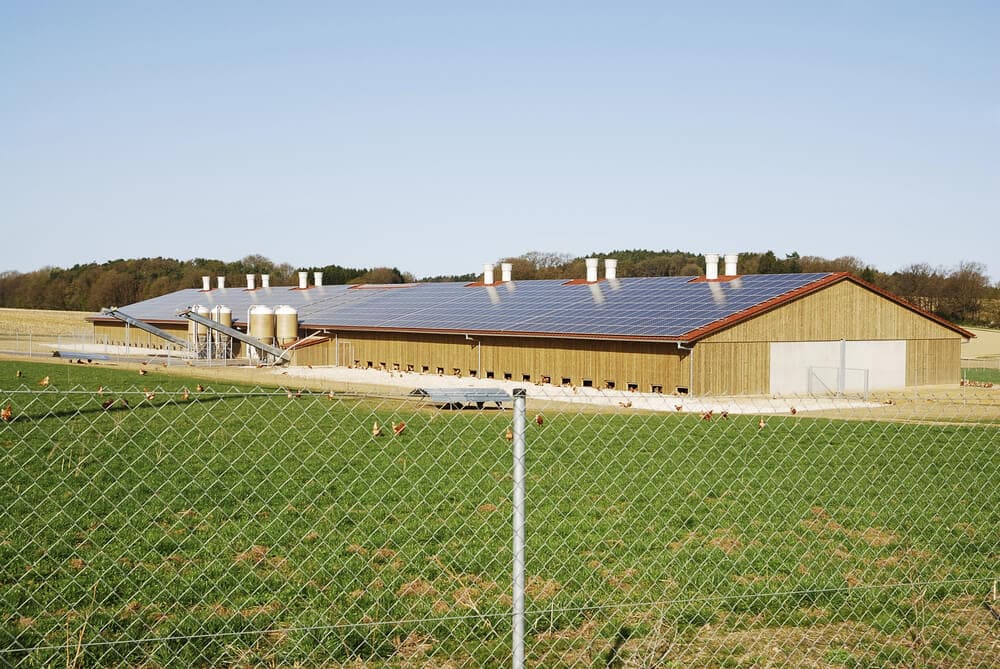
Can chickens live under solar panels?
What is the minimum acreage for a chicken farm solar system?
Do I still pay Eskom if my chicken farm has solar?
Does rain affect solar panels on a poultry house?
Does a grid-tied solar system on a farm have to be registered with Eskom?
Ready to Protect Your Flock and Lock Your Energy Costs?
We Take On a Limited Number of Commercial Farm Assessments Each Month
Our commercial team gives every new client a detailed site assessment — not a quick quote, but a full walkthrough of your farm, your load profile, and your savings potential.
If you’re ready to protect your flock and lock your energy costs for the next 25 years, the next step is simple.
Here’s exactly what happens next
We call you within 4 business hours
One of our commercial assessors confirms your details and asks a few quick questions about your farm setup. Mon–Sat.
We visit your farm within 1–2 weeks
We walk your houses, analyse your load profile, fan count, lighting setup, water systems, and monthly usage. No cost, no obligation.
You receive your full energy savings report within 48 hours
Exact savings projection, system specification, and ROI timeline — in writing, before you commit to anything.
✅ No obligation — ever ✅ Free farm assessment ✅ Savings report in 48 hours ✅ 4.7★ rated
Our guarantee: Your energy savings report will show exact projected savings for your farm — in writing, before you commit to anything. If the numbers don’t work for you, you walk away with a free analysis of your energy costs. No pressure, no follow-up sales calls you didn’t ask for.