
For Food & Beverage Processing Plants
Your Production Line Runs on Tight Margins and Tighter Schedules.
Eskom Is Making Both Harder Every Year.
Food and beverage processors carry energy costs that can’t be paused, passed on, or absorbed indefinitely. BFO Solar locks your rate at R1.20/kWh for 25 years — giving you the one input cost that doesn’t move.
The Problem
Every Year Eskom Takes More. Food Processors Have No Room Left in the Margin.
Food and beverage processing is a margin business. Retail buyers set your pricing. Ingredient costs fluctuate. Labour rates rise. The one line item you might have controlled — electricity — has instead become one of the most volatile inputs in your operation. Eskom has increased tariffs by over 500% since 2007, and every increase hits your cost of goods directly, with no corresponding adjustment from your retail or distribution partners.
The production line cannot stop for load shedding. Pasteurisation cycles, CIP (clean-in-place) processes, cold chain systems, packaging lines — interrupting any of these mid-cycle risks product loss, food safety compliance events, and rejected batches. The cost isn’t just the electricity you didn’t have. It’s the product you can’t sell, the audit you must document, and the retail relationship you must explain.
Electricity is now 10–20% of total operating cost for most food processing facilities — and rising every year. The processors who resolve this structural cost problem in the next 24 months will be structurally more profitable than those who don’t, for the rest of the decade.
Eskom tariffs have risen more than 500% since 2007. Unlike labour or ingredients, electricity increases are government-mandated and non-negotiable — and NERSA’s multi-year pricing determinations signal further increases are built in for the next decade.
Food safety systems — pasteurisers, retort systems, CIP cycles, cold chain — cannot be interrupted without triggering compliance events. A power failure mid-process doesn’t just cost you the batch. It requires documented investigation, potential product destruction, and possible notification to your retailer or food safety authority.
Packaging lines, filling systems, and labelling equipment have tight operational windows aligned to retailer delivery schedules. A Stage 4 event that removes 4–8 hours of production time doesn’t delay your shipment — it cancels it, with the penalties, short deliveries, and out-of-stock consequences that follow.
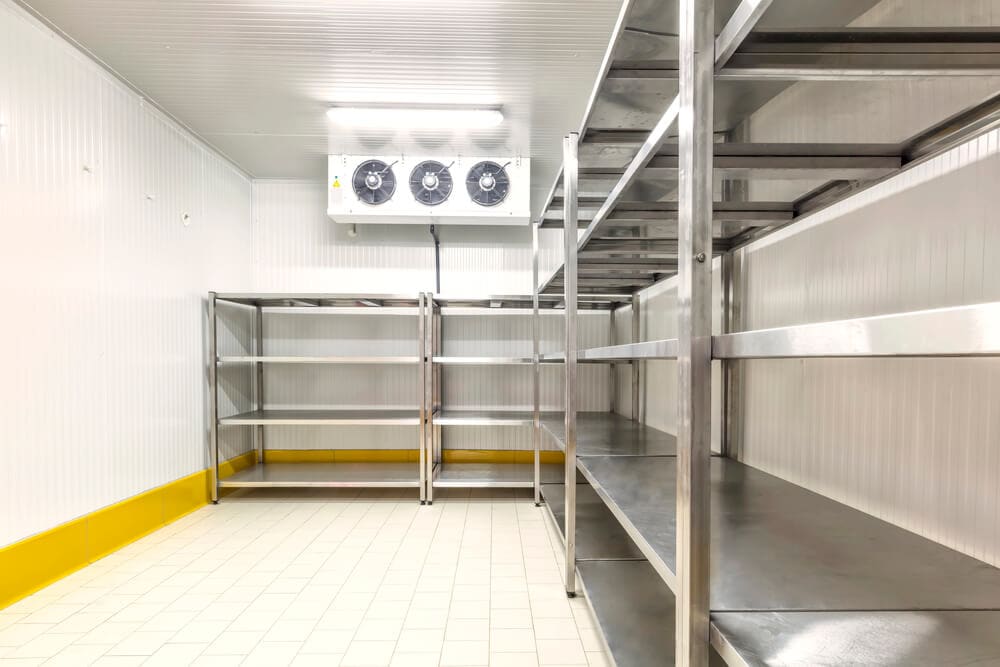
Cold chain failures during load shedding events represent the highest single-incident cost in food processing. A chiller or blast freezer that loses power for an extended period risks R50,000 to R500,000+ in spoiled product — in a single event. Generator fuel and maintenance adds a second variable cost on top of the Eskom bill.
Five-year financial models and capital investment decisions are being built on energy cost assumptions that are already outdated by the time the ink is dry. An energy cost that can be locked at R1.20/kWh for 25 years changes every capital payback calculation in your facility.
The food processors who lock their energy costs in 2026 will have a structural margin advantage for the rest of the decade.
The Truth About Solar + Food & Beverage Processing
“Can Solar Power a Food Production Facility That Runs 24 Hours a Day?”
Yes — and the economics are more compelling for food processors than almost any other commercial sector.
The concern is understandable: food processing runs 24 hours, and solar only generates during daylight. The answer is how the system is designed. Most food processing facilities carry their heaviest electrical load during daytime operating shifts — compressors, conveyors, pasteurisers, fillers, and CIP systems all peak during the 6am–6pm solar generation window. Battery storage fills the gaps, bridges load shedding, and provides seamless failover in milliseconds when Eskom drops.
Critically, the solar system doesn’t need to cover 100% of your load to be financially transformative. Offsetting 60–80% of your daytime Eskom consumption at R1.20/kWh against what you’d otherwise pay at R2.50+/kWh and rising produces savings that compound every year for 25 years. Battery storage specifically covers your food safety critical systems — cold chain, CIP, pasteurisation — to ensure zero interruption during load shedding events.
BFO Solar has designed and installed systems on food and beverage facilities since 2011. Every system design starts with a detailed load profile analysis — your shift schedule, critical systems, cold chain requirements, and thermal loads — before any sizing is done. You receive a written specification and savings projection before you commit to anything.
Commercial Sizing
Your system is designed around your exact kWh consumption profile — not a generic estimate.
Battery + Grid Backup
LiFePO4 battery storage bridges load shedding. Grid connection covers any remaining gap automatically.
13-Year Track Record
BFO Solar has installed systems on commercial and industrial facilities running 24/7 operations since 2011.
Why BFO Solar Specifically
You’ve Probably Already Received 3 Solar Quotes. Here’s Why This One Is Different.
Most commercial solar companies learned their trade on residential installations and scaled up. BFO Solar started in commercial and industrial — and stayed there.
Commercial-first, not residential-adapted. We don’t apply residential sizing rules to industrial loads. Your load profile and demand peaks are analysed before any design is drawn. Most solar companies send a sales rep. We send an engineer.
Post-installation accountability. Your monitoring dashboard isn’t just a nice-to-have — it’s how we stay accountable. If your system triggers an alert, our technical team responds. You’re not on your own after handover.
COC-certified, insurance-compliant installations. Every BFO Solar installation includes a Certificate of Compliance. Your insurance policy and financing facility require this. Not every solar company delivers it as standard.
Battery storage as standard, not an upsell. For operations where power continuity is critical, battery storage is not optional — and we design it into the system from day one, sized around your specific load shedding exposure.
13 years of SA-specific track record. South African power infrastructure, load profiles, and SARS requirements are unlike anywhere else. We’ve operated through every stage of the load shedding era. We’re not guessing — we have the data.
The BFO Commercial Process
Three Steps to Energy Independence — Built Around Your Operation
Free Site Assessment
We visit your facility, analyse your load profile, monthly spend, demand profile, and roof/ground space. You receive a detailed energy savings report — at no cost and no obligation.
Custom System Design
Our engineers design a solar-plus-storage system sized specifically for your operation. Every system includes battery backup sized to protect your critical loads through load shedding.
Certified Installation + Monitoring
BFO’s certified team installs your system with zero downtime to your operation. Post-installation, you get access to a real-time monitoring dashboard so you can always verify your critical loads are protected.
Why It Works
Everything a Commercial Operation Needs From a Solar Partner
Commercial-Grade System Sizing
We engineer your system around your actual load profile — not a residential rule of thumb.
Your critical loads never go without power.
LiFePO4 Battery Storage
Built-in battery backup sized to protect your critical operations through any load shedding stage.
Food safety systems stay on. Cold chain stays intact.
R1.20/kWh Locked Rate
Your energy cost is fixed for 25 years. Eskom increases become irrelevant to your operations.
Finally, a line item you can actually budget.
Zero-Downtime Installation
Phased installation approach designed around your operation. Your business keeps running throughout.
No disruption. No production gaps during install.
Real-Time Monitoring Dashboard
24/7 visibility of your system’s output and your operation’s power status.
Instant alerts if anything needs attention — before it becomes a problem.
COC-Certified Every Time
Every installation is carried out by certified electricians compliant with SANS standards. Your insurance and financing partners require it — we deliver it as standard.
Your compliance is covered from day one.
The Investment
“What Does a Commercial Solar System Actually Cost?”
It’s the question every business owner has but few pages answer. Here’s the honest version.
Commercial solar systems typically range from R800,000 to R5,000,000+, depending on your facility’s size, monthly consumption, and battery requirements.
That range is wide — because your load profile is unique. What we can tell you with certainty: based on current Eskom tariffs and a locked rate of R1.20/kWh, most commercial clients reach full payback within 3–5 years. After that, your energy cost is near-zero for the remaining 20+ years of the system’s life.
Typically 50–150 kWp with battery storage
Typically 150–400 kWp, larger battery banks
Custom engineered, 3-phase, multi-array
Ranges are indicative only. Your free site assessment will produce an exact specification and cost — in writing, before you commit to anything.
The People Behind Your Installation
You’re Making a 25-Year Decision. Here’s Who You’ll Be Working With.
Every commercial assessment is handled by one of our experienced team members — not a call centre.

What Our Customers Say
4.9 Stars Across 859+ Installations
Don’t take our word for it. Here’s what South African business and homeowners say about BFO Solar.


The Real Cost Comparison
The True 10-Year Cost: Eskom vs BFO Solar
We’re showing you both columns — including the system cost. Because a comparison that hides the capital cost isn’t a comparison, it’s a sales trick.
Eskom projections assume 8% annual tariff increase from ~R2.50/kWh. BFO Solar estimates based on system sized for 50,000 kWh/month facility. System cost depends on load profile, battery sizing, and roof access — your free assessment gives you the exact number.
Common Questions
Everything You Need to Know Before Your Assessment
Can solar handle our production line, refrigeration, and packaging simultaneously?
What happens to food safety systems — pasteurisers, CIP, cold chain — during load shedding?
What’s a realistic payback period for a food or beverage processing facility?
What happens on overcast days or in winter when solar generation drops?
Does a solar installation comply with food safety audit requirements (FSSC 22000, BRC, HACCP)?
How long does installation take, and can it happen without stopping the production line?
Ready to Lock Your Energy Costs?
We Take On a Limited Number of Commercial Assessments Each Month
Our commercial team gives every new client a detailed site assessment — not a quick quote, but a full analysis of your load profile and savings potential.
If you’re ready to lock your energy costs for the next 25 years, the next step is simple.
Here’s exactly what happens next
We call you within 4 business hours
One of our commercial assessors confirms your details and asks a few quick questions about your facility. Mon–Sat.
We visit your site within 1–2 weeks
We analyse your load profile, demand peaks, roof access, and monthly usage. No cost, no obligation.
You receive your full energy savings report within 48 hours
Exact savings projection, system specification, and ROI timeline — in writing, before you commit to anything.
✅ No obligation — ever ✅ Free site assessment ✅ Savings report in 48 hours ✅ 4.9★ rated
Our guarantee: Your energy savings report will show exact projected savings for your facility — in writing, before you commit to anything. If the numbers don’t work for you, you walk away with a free analysis of your energy costs. No pressure, no follow-up sales calls you didn’t ask for.
