
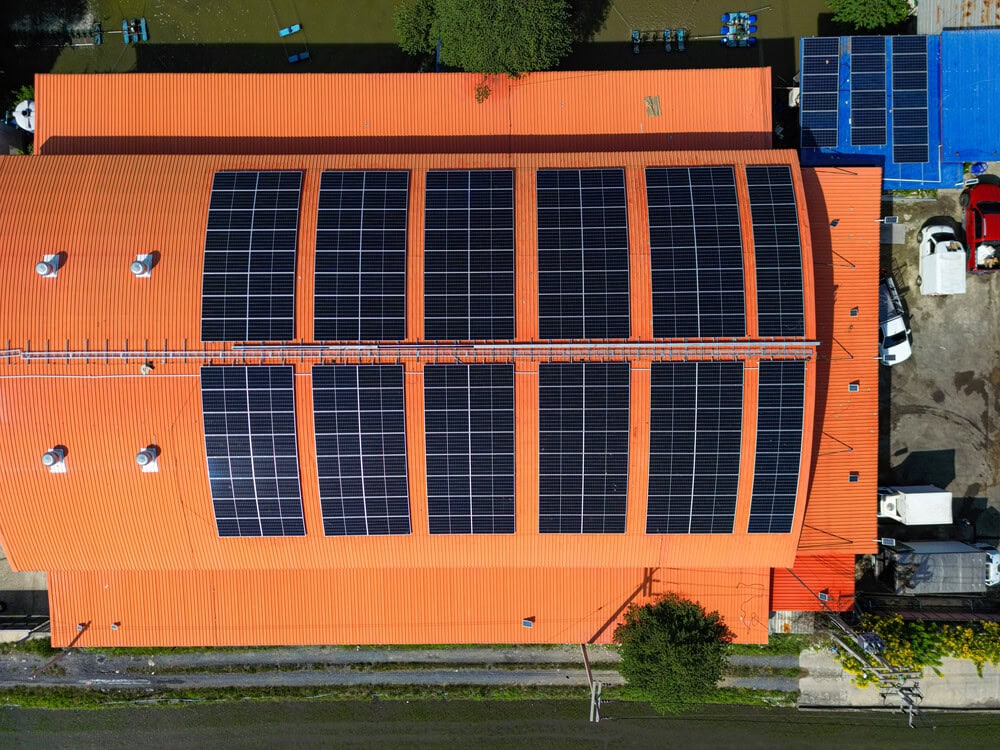
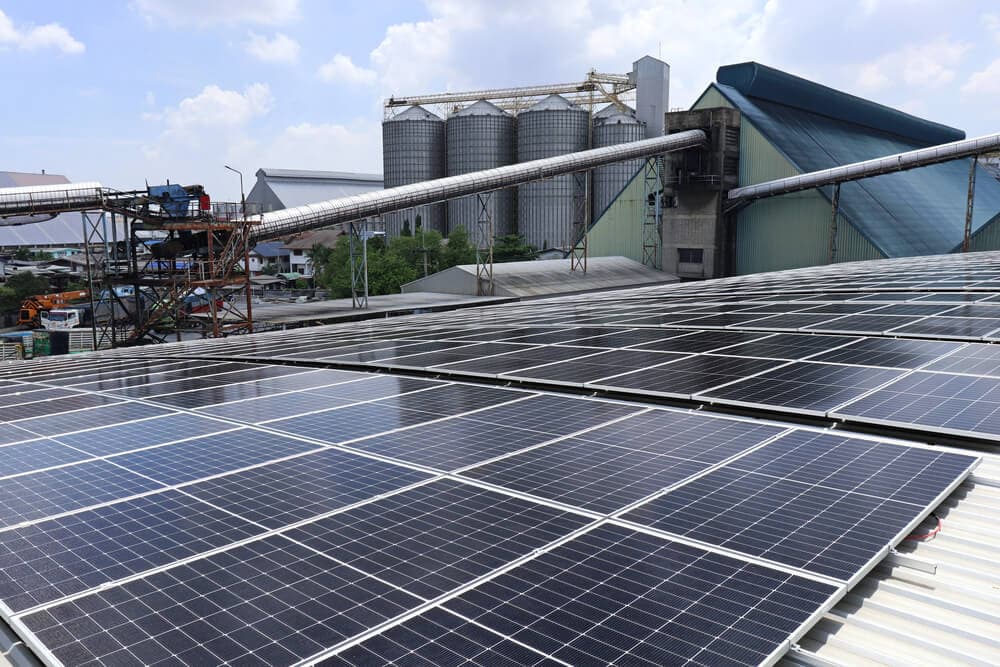
For a South African business, solar with battery backup costs less to run than a diesel generator at commercial scale — roughly R1.20 per kWh locked in for 25 years versus R6.90+ per kWh in diesel alone. The right answer still depends on runtime needs, site constraints, and what you already own.
We’ve installed solar for 859+ businesses over 13 years, and the solar vs generator question comes up in nearly every commercial sales conversation. The honest answer isn’t “solar always wins” — it’s that the two solve different problems, and knowing which one you actually have saves you from an expensive mismatch.
Solar vs Generator: The Actual Cost at Commercial Scale
Start with the number that matters most: cost per kWh generated, not the sticker price of the equipment.
A typical commercial diesel generator burns around 0.25 litres of diesel per kWh at full load. That climbs toward 0.30 L/kWh at partial load, as combustion efficiency drops (WaltPower fuel consumption data). At the current regulated diesel price of roughly R27.50 per litre (AA fuel pricing), that works out to approximately R6.90 per kWh in fuel alone — before servicing, oil changes, and the wear that comes from regular runtime.
Compare that to grid electricity. South African businesses on Eskom’s Megaflex tariff pay in the range of R2.29–R3.12 per kWh depending on time-of-use period and season (Eskom tariffs and charges), and that rate rises every year. BFO’s commercial solar installations lock in a cost as low as R1.20 per kWh for the 25-year life of the system — no fuel price exposure, no annual tariff increase.
| Diesel generator | Grid (Eskom Megaflex) | Solar + battery (BFO) | |
|---|---|---|---|
| Running cost per kWh | ~R6.90 (fuel only) | R2.29–R3.12 | As low as R1.20 (locked) |
| Price trajectory | Rises with fuel price | Rises annually | Fixed for system life |
| Maintenance load | Regular servicing, oil, filters | None (grid-side) | Low — no moving parts |
| Fuel/supply risk | Diesel supply and price volatility | Grid-dependent | None once installed |
Upfront cost is where generators still look attractive on paper — a mid-size commercial diesel genset is far cheaper to buy than a full solar-and-battery installation sized to match its output. That gap closes fast once you run the numbers over 5 and 10 years of actual use, because the generator’s running cost compounds every single hour it works.
What this looks like over time. Take an illustrative facility averaging 500 kWh a day of backup or continuous load — a mid-size cold storage site or a small manufacturing shift, for example. Run the per-kWh figures above out over a year (182,500 kWh) and the gap stops being theoretical:
| Diesel generator (fuel only) | Grid (Eskom, midpoint R2.70/kWh) | Solar + battery (BFO, R1.20/kWh) | |
|---|---|---|---|
| Annual running cost | ~R1,259,000 | ~R493,000 | ~R219,000 |
| 5-year running cost | ~R6.3 million | ~R2.5 million | ~R1.1 million |
| 10-year running cost | ~R12.6 million | ~R4.9 million | ~R2.2 million |
These figures are illustrative — they use the fuel/tariff rates above against a hypothetical 500 kWh/day load, not a specific client’s metered data, and they don’t include the upfront capital cost of any of the three options (the Commercial Solar Cost & ROI Guide breaks that down by system size). What they do show clearly: the gap between diesel and solar doesn’t stay flat over time — it compounds every year, in solar’s favour.
What Can a Generator Handle That Solar Can’t — and Vice Versa?
Neither option is universally better. Each is built for a different job.
Generators give you unlimited runtime for as long as you have fuel. There’s no capacity ceiling — if you need power for 18 hours straight, a correctly sized generator delivers it. The cost is high running expense, noise, diesel exhaust emissions, and a maintenance schedule that doesn’t pause for your production schedule.
Solar with battery storage is silent, has zero fuel cost, and needs almost no maintenance once commissioned. Its limit is capacity — the battery bank stores a fixed amount of energy, and once it’s depleted, output depends on the solar array recharging it. For most commercial sites this is a non-issue with correct sizing, but it does mean solar is a poor fit for continuous, unpredictable heavy loads with no solar recharge window.
The pairing we install most often at commercial sites is a hybrid setup: solar and battery carry the daily load, with a generator held in reserve for extended outages or unusually high-demand periods. It’s not an either/or decision for most businesses — it’s about which system carries the base load and which one is the backstop.
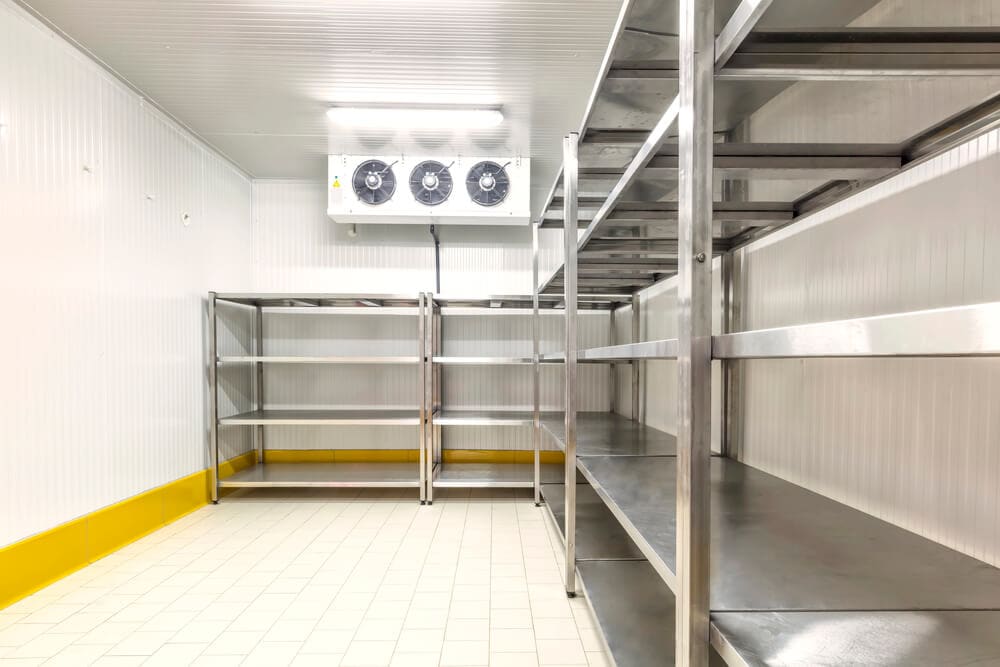
Sizing that hybrid split correctly is the actual engineering problem, and it’s specific to the site. A cold storage facility with a low tolerance for temperature drift needs enough battery autonomy to cover its worst-case gap without ever touching the generator for routine operation. An office park with predictable daytime-only load can run almost entirely on solar generation during business hours and lean on battery storage for the edges of the day. Neither of those is a generic template — it’s why a facility-specific load profile matters more than a one-size answer.
| Generator | Solar + battery |
|---|---|
| ✅ Unlimited runtime with fuel supply | ✅ Zero fuel cost once installed |
| ✅ Lower upfront cost | ✅ Silent operation |
| ❌ High running cost, rises with fuel price | ✅ Minimal maintenance |
| ❌ Noise and emissions | ❌ Capacity-limited by battery size |
| ❌ Regular servicing required | ❌ Higher upfront cost |
Why Are Most Commercial Facilities in South Africa Moving to Solar-First?
Four things are driving the shift, and none of them are about grid outages.
Cost trajectory. Diesel prices move with international oil markets and the rand, and Eskom’s Megaflex tariff rises annually. A locked R1.20/kWh rate becomes more valuable every year those two keep climbing — it’s the same logic as fixing a mortgage rate before increases hit.
Compliance and neighbours. Solar installations need a Certificate of Compliance (COC) on the electrical work — a straightforward, one-time process at commissioning. Generators running regularly at a commercial site carry ongoing exposure instead: diesel exhaust emissions compliance and on-site fuel storage regulations. In practice, the complaint we hear about most from clients is noise — from neighbouring tenants or residential areas near industrial parks. A generator that’s fine as an occasional backup becomes a recurring operational headache once it’s running daily.
Maintenance load. A generator running as a primary power source needs regular servicing: oil changes, filter replacements, load-bank testing to stop the engine from glazing on light loads. Solar with battery storage, once commissioned, needs comparatively little.
Budget predictability. A locked cost per kWh is easier to plan around than a variable one. Finance teams can model a fixed solar cost into a 25-year budget with confidence; modelling diesel spend means guessing at fuel prices and the rand’s direction, both of which move independently of the business.
13 years, 859+ installations. We’ve watched this shift happen at commercial sites across South Africa — from cold storage facilities to office parks to food processing plants — and the pattern holds: businesses that model the real 5-year cost almost always move solar-first, keeping a generator (existing or new) as backup rather than a primary power source.
When Does a Generator Still Make Sense for a Business?
Solar isn’t the right call for every site, and we’d rather tell you that upfront than oversell a system that won’t fit.
- Very short-duration backup only. If your outage risk is occasional and brief, and the load isn’t large, a generator’s low upfront cost and simplicity can outweigh solar’s long-term savings — the payback period on solar needs enough runtime hours to make sense. A site that needs backup for a handful of hours a year doesn’t generate enough usage to justify a large capital outlay.
- Sites where solar isn’t physically feasible. Limited roof or ground space, heavy shading from surrounding buildings, a lease that restricts rooftop alterations, or a site orientation that can’t support a system large enough to matter. Some multi-tenant industrial parks fall into this category by default.
- You already own a generator. If there’s a working genset on-site, the better move is usually to integrate it into a hybrid setup as backup rather than replace it outright — it’s already a sunk cost, and it still has a job to do during extended solar-battery depletion or planned maintenance windows on the solar side.
- Zero-tolerance continuity needs. Data centres, medical-grade cold chain, and some pharmaceutical or laboratory environments sometimes specify generator redundancy as a compliance or insurance requirement regardless of the cost case — in those cases the conversation shifts from “which is cheaper” to “which meets the specification,” and a hybrid setup is usually still the answer rather than generator-only.
Frequently Asked Questions
Is solar or a generator cheaper to run for a business?
Solar is significantly cheaper to run at commercial scale. Diesel generators cost roughly R6.90 per kWh in fuel alone at current diesel prices, before maintenance. Grid electricity on Eskom’s Megaflex tariff runs R2.29–R3.12 per kWh. A commercial solar and battery system can lock in a rate as low as R1.20 per kWh for 25 years.
How much does it cost to run a generator vs solar for a business?
Generator running cost depends on fuel consumption (typically 0.25–0.30 L/kWh at commercial scale) multiplied by the current diesel price, plus servicing. Solar running cost after installation is close to zero — no fuel, minimal maintenance — which is why the total cost comparison shifts heavily in solar’s favour the more hours a system runs.
Can solar replace a generator for a business completely?
For many commercial sites, yes — provided the solar and battery system is sized correctly for peak load and the site has adequate roof or ground space. For sites with very high continuous loads, limited solar capacity, or a compliance requirement for generator redundancy (some data centre and medical cold-chain specifications, for example), a hybrid setup that keeps a generator as backup is usually the more practical answer than a full replacement.
What size solar system replaces a generator?
It depends on your facility’s peak demand and daily energy use, not the generator’s kVA rating alone. Two facilities with identically rated generators can need very different solar and battery sizing depending on how many hours a day they actually draw load, how much of that load is concurrent, and what backup runtime they need to cover. A correctly sized system is based on your actual metered load profile — this is exactly the kind of calculation a facility-specific quote is for, rather than a generic rule of thumb.
Get a Straight Answer for Your Facility
The cost comparison above is representative of commercial-scale numbers — your actual figures depend on your facility’s load profile, current generator setup, and site constraints. If you want to know exactly where your business lands on solar versus generator versus a hybrid setup, get a solar vs generator cost comparison for your facility built around your real usage data, not a generic estimate.